Providing new opportunities and enhancing interest for STEM in school students
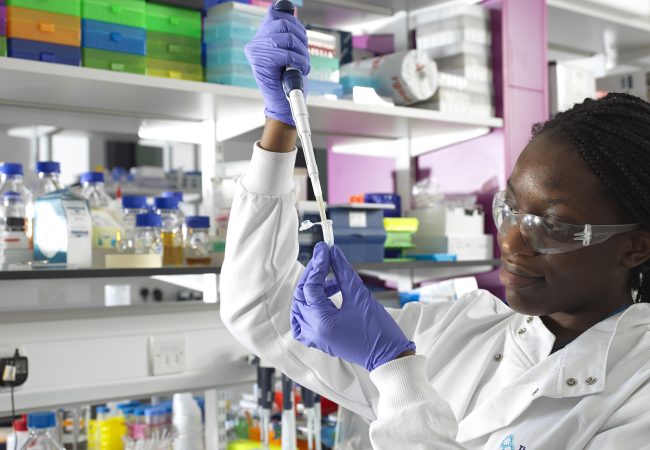
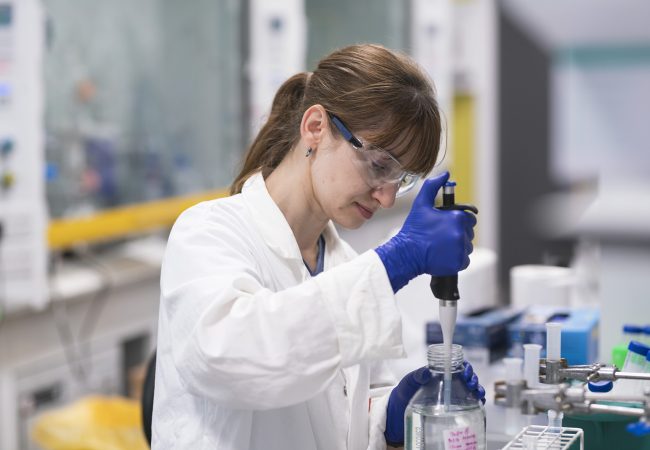
The Franklin’s schools outreach programme inspires school students by showcasing real-world STEM careers through workshops, researcher visits and interactive activities. By increasing science capital early, we help students see that science is accessible. Feedback from our workshops has shown that students had a greater interest in STEM following our workshops and that they have reconsidered the possibility of a future career in science.
We work in partnership with businesses whose involvement with our activities also often supports their own Corporate Social Responsibility (CSR) goals.
Overview
Training the next generation of researchers does not start from the university level, but from inspiring younger generations at the primary and secondary school levels. Students that have not expressed STEM aspirations by the age of 10 are unlikely to develop them and continue the study of science subjects by age 14. This underscores the importance of early, meaningful engagement with science to broaden participation and interest in STEM careers. There is a particular need to target students with a lower science “capital” – the amount of STEM related knowledge, attitudes, skills and experiences a person has – and allow students to see that scientists are “people like me”.
We work with the Education Business Partnership to introduce students to science and technology careers. This partnership started in 2019 when we joined the Hi-Tech Horizons programme, which introduced school students to businesses in the tech industry.
Since the programme started, we have reached 6,104 students. We initially targeted year 8-10 students, giving them an introduction into cell biology followed by an activity either based on the use of Artificial Intelligence for machine learning or how to make decisions on funding research projects.
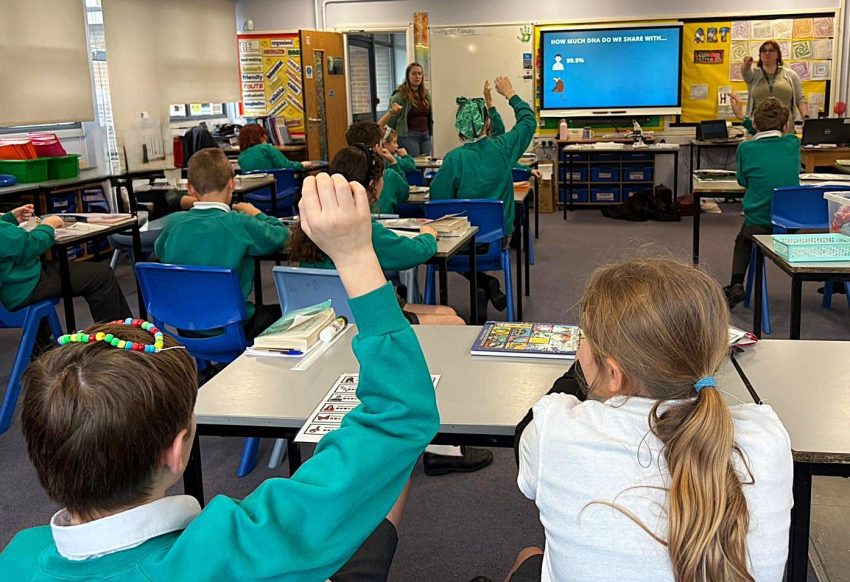
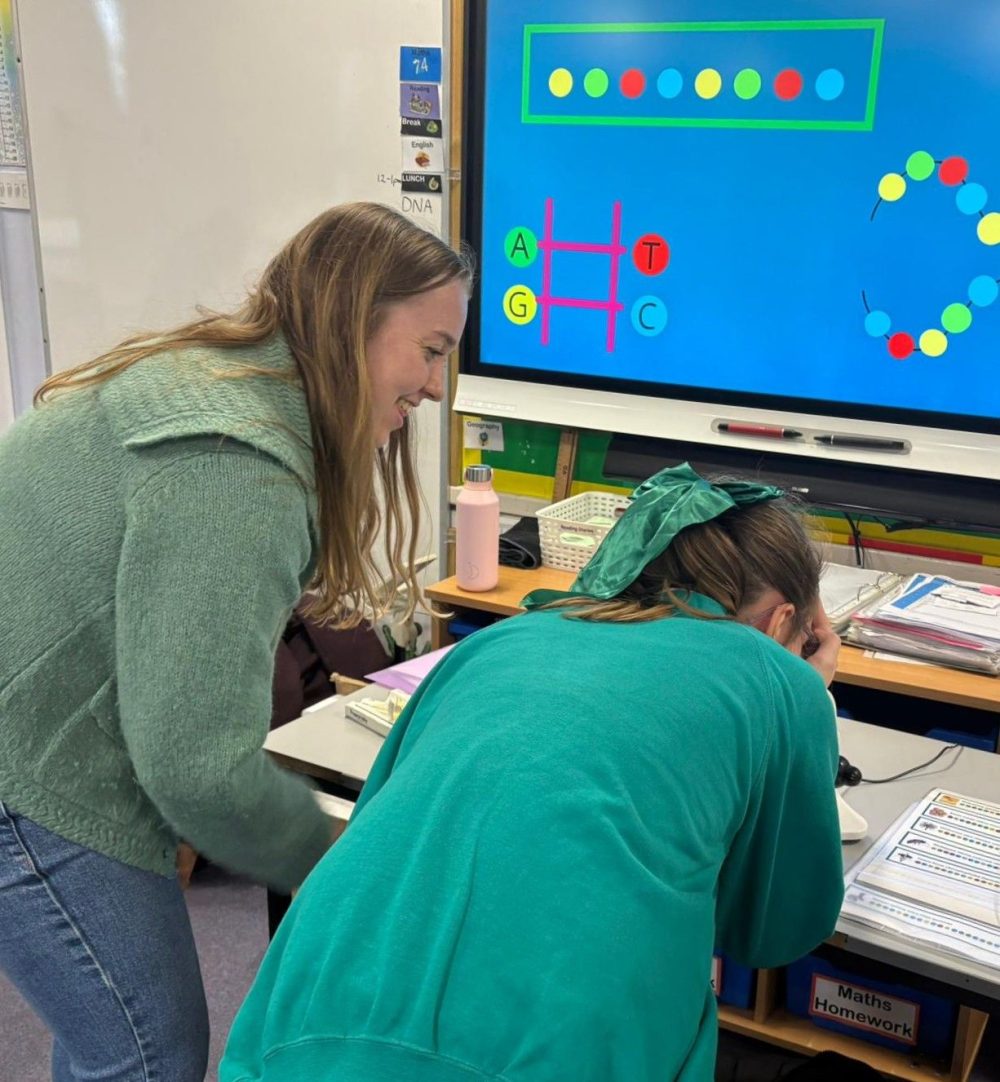
In 2024 we launched primary school workshops in addition to those for the older children. These focused on inspiring students with Dr Rosalind Franklin’s legacy and helping them to see science as accessible and exciting.
Audience impact
Our workshops are intended to broaden students’ perceptions of science both in terms of careers and the interdisciplinary nature of science. Feedback on these workshops has been overwhelmingly positive, for the 2024/2025 academic year 90% of primary students found the new workshops valuable as it increased their knowledge of possible future careers in STEM. Amongst secondary students, 78% reported an increased interest in STEM careers with 28% of student changing their minds about careers and reconsidering the possibilities for a career in science following the workshop.
Many of the students commented following the workshops that it helped them to understand the variety of careers available in science. Following one of our AI workshops in 2025 one student commented “I enjoyed the workshop and I learnt more about science and this career path”. A student in the 2021/2022 year summarised the session as “A workshop about science which tells you the things that you don’t stereotypically believe science/tech involves.” We are beginning to see the impact of our schools engagement programme as greater interest in science shown by rising numbers of work experience requests from students that we have interacted with through our outreach programmes.
“The Education Business Partnership have been working with the Rosalind Franklin Institute for a number of years, working in collaboration to reach a wide range of students in both Primary and Secondary settings.
The workshops are a fantastic way to introduce the younger students to the world of science and inspire and engage the older students, providing a valuable insight into the range of jobs and opportunities available to them in the STEM industry.
The interactive and engaging way that the workshops are designed and delivered means that even those students who have previously not considered the STEM sector as something they may be interested in pursuing, are motivated to take part and this is reflected in the student satisfaction scores and feedback we receive post event. For this year alone, 72% (AI Categories), 74% (Peer Funding) and 90% (DNA Bracelets) of students taking part stated that they had found the sessions valuable.
We thoroughly enjoy working in partnership with Alice and the team and hope to continue to do so for many years to come!”
Amy Fidler – Project Officer, Education Business Partnership
Franklin staff and PhD student impact
This year, Franklin scientists and students have also been joining the Franklin’s Communications Officer to deliver the workshops in primary schools, this offers pupils a chance to meet real-life scientists and envision themselves in STEM roles, our researchers have also begun to deliver bespoke workshops through their own networks.
These opportunities have allowed our staff and students to improve their communication skills, enabling them to translate complex scientific topics for a younger audience, as well as improving their confidence in public speaking and preparing them for communicating their work with non-specialist audiences. The opportunity to inspire a new generation of scientists also gives our researchers a sense of fulfilment in their roles and can increase their passion for their work.
“I thoroughly enjoyed my involvement with the ‘DNA bracelets’ workshop held at a local primary school. It was a great opportunity to challenge my communication skills to convey complex scientific concepts in an accessible way for the children to understand, as well as strengthening my confidence in directing team activities and public speaking. The class were highly engaged throughout the workshop and I was asked lots of questions about my role at the Franklin, showing that the participants were inspired and excited about science during our visit. Overall, this was rewarding and positive experience for both myself and students.”
Kelly Parker – Research Assistant, the Rosalind Franklin Institute
“Getting involved with the DNA bracelet workshops has been a really valuable part of my time here. It pushed me to think about how to explain science in an engaging and accessible way, which has definitely improved my confidence when speaking to non-specialist audiences. I found it especially rewarding to see the genuine excitement and curiosity from students, and it reminded me why I first became interested in research myself and why I am currently pursuing my PhD here.”
Minal Dayaram – PhD Student, the Rosalind Franklin Institute
More case studies
-
![]()
The Franklin Hub opening
-
![]()
Franklin researchers demonstrate ‘significant potential’ of llama antibodies as potent Covid-19 treatment
-
![]()
Driving technological leaps for healthcare
-
![]()
Optimised sample preparation fuels the ‘resolution revolution’
-
![]()
Discovery of new Covid infection mechanism offers clue to SARS-CoV-2 leap to humans
-
![]()
Piecing together a puzzle in protein damage