Anthony Devlin awarded BBSRC Fellowship to advance carbohydrate research
Anthony Devlin, a project lead at the Rosalind Franklin Institute, has been awarded a Biotechnology and Biological Sciences Research Council (BBSRC) Fellowship to develop new tools for studying complex carbohydrates in human tissue. This 3-year fellowship will support his work to uncover the structure and function of these essential but often overlooked biological molecules, opening up new opportunities for understanding health and disease.
Carbohydrates are found throughout the body and play important roles in processes such as cell communication and structural support. Despite their significance, they remain difficult to study, and many of their structures are still unknown. Anthony’s research aims to address this challenge by developing new methods to analyse carbohydrate structures directly within tissues, enabling researchers to identify specific molecular arrangements in precise locations rather than relying on broad, averaged measurements.
A key focus of the fellowship is the role these molecules play in the brain. Memory depends on networks of connections between neurons, which gradually weaken as we age. These connections are supported in part by specialised carbohydrate structures, but current approaches cannot fully describe how they are organised or how they change over time. By creating tools that can map these structures at a local level, this work will help improve understanding of how memory declines and could, in the longer term, inform strategies to restore or maintain these connections.
Reflecting on the potential of the research, Anthony said: “There’s a lot of unknown structures that could be the next generation of therapeutics, could be the next biomarker, could be the next great drug, and we simply do not know what they are.”
While the initial emphasis is on brain research, the technologies developed through the fellowship have wider relevance. Changes in carbohydrate structures are associated with a range of conditions, including arthritis, cancer and other age-related diseases. By making it easier to study these complex molecules, the work will provide new opportunities for researchers across different fields to investigate how these structural changes influence disease processes.
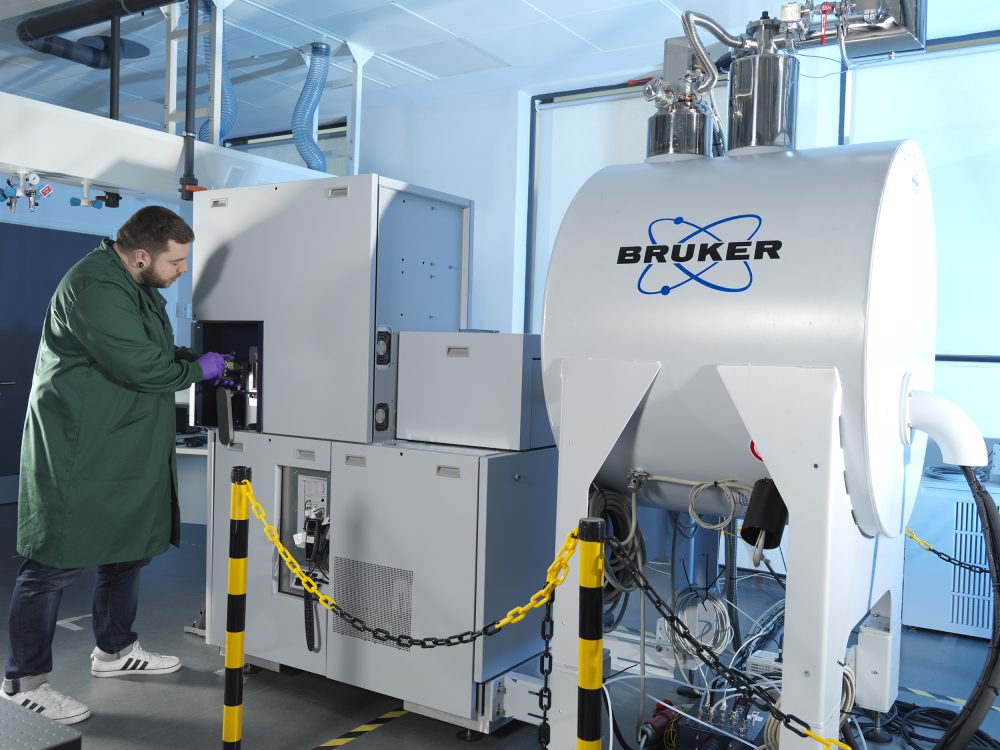
The project brings together expertise from across academia and industry. Anthony is working with Bruker to develop advanced instrumentation and alongside ongoing work within the Rosalind Franklin Institute’s broader programmes in brain science. This collaborative approach reflects the Institute’s focus on combining technology development with biological insight to address major challenges in health and life sciences.
The BBSRC Discovery Fellowship marks an important milestone in Anthony’s career, providing him with the opportunity to establish an independent research programme and lead his own direction of work. By developing tools to uncover previously inaccessible biological detail, the fellowship supports research that could significantly advance our understanding of carbohydrates in health and disease, and enable new approaches to tackling a range of conditions.