
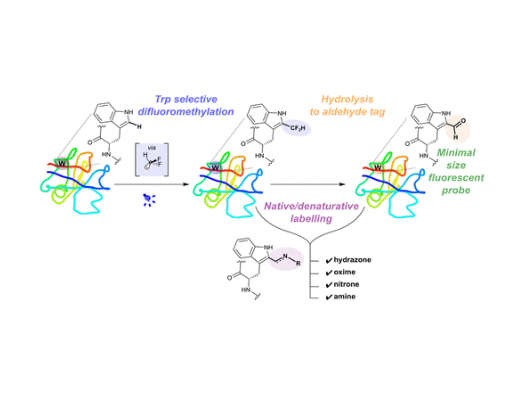
Scientists discover new two-step technique for editing proteins
Researchers at the Rosalind Franklin Institute and Oxford University have discovered a new way of making changes to proteins – a group of biomolecules responsible for a vast array of important functions in the human body. By using light as…
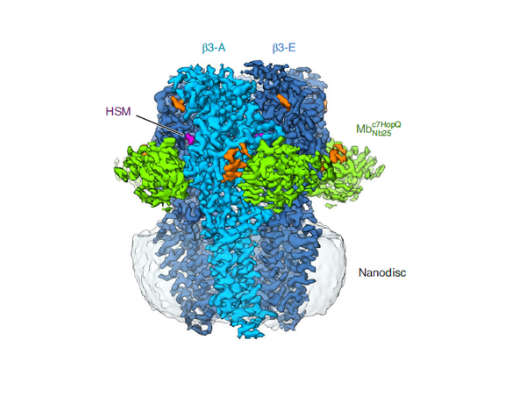
A new toolkit to expand the use of Cryo-EM
Franklin researchers continue to develop nanobodies, antibodies derived from camelids, as tools for stabilising biological structures to allow for higher resolution single particle electron cryomicroscopy (cryo-EM) reconstructions. The team have been working in partnership with Vlaams Instituut voor Biotechnologie (VIB),…
Scientists design light-activated catalysis system for use in protein editing
A team of scientists have created a light-activated system that allows new side-chains to be grafted on to proteins, paving the way for a host of applications in areas such as drug development or vaccines. This work represents a large…
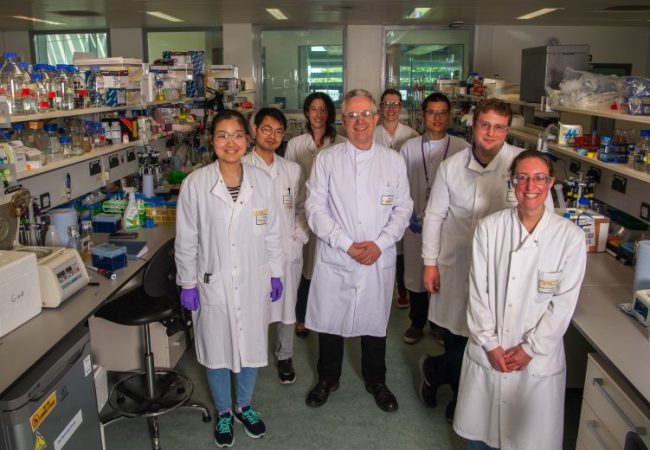
Scientists publish first description of enzyme with potential for synthesis of new antiviral drugs
The Rosalind Franklin Institute scientists working as part of an international team have published the first description of an enzyme that can be used in the development and synthesis of new antiviral drugs. The enzyme, known as ForT, plays a…
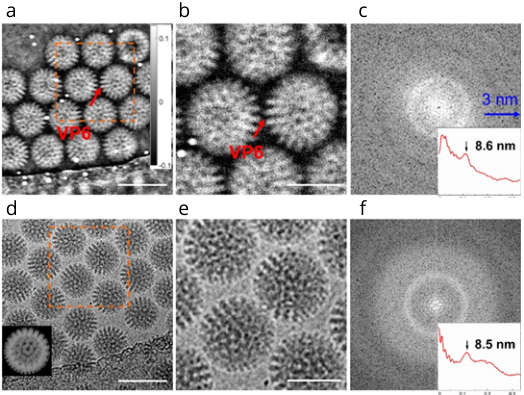
Superior imaging with cryo-ptychography
Professor Angus Kirkland and Dr Judy Kim have been working as part of an international team using JEOL instruments at the electron Physical Sciences Imaging Centre at Diamond, who have applied electron ptychography to biological structures for the first time.…
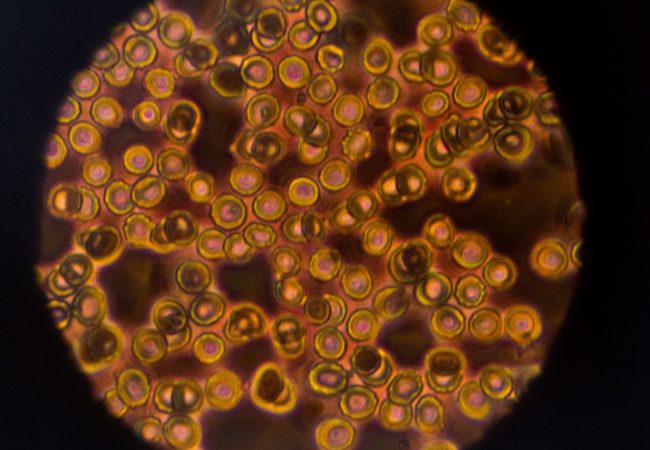
Creating a Molecular Movie
Professor James Naismith’s team will work closely with researchers from the University of Cardiff to use state-of-the-art technology to obtain time-lapse footage of enzymes catalysis. This innovation would allow scientist to first time visualise changes in the enzyme as the…
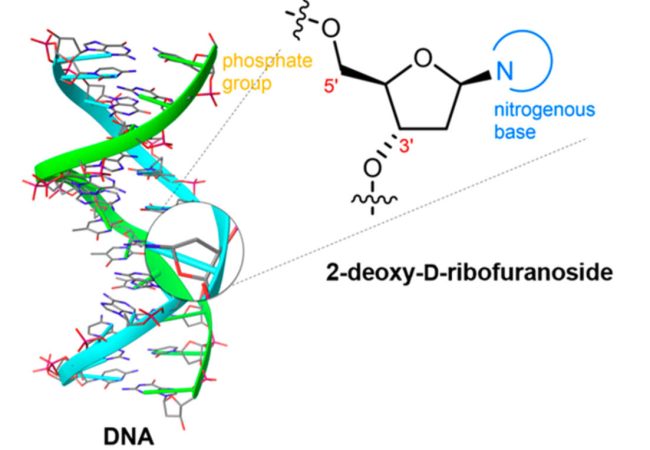
Viewing ‘naked’ DNA
We were excited to see Ben Davis’ group publish their first paper with their new Franklin address earlier this month. Working with Emilio Cocinero from Universidad del Pais Vasco (UPV) and Francisco Corzana from Universidad de la Rioja, Ben Davis’…
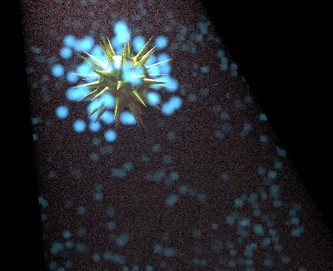
A new star of early cancer diagnosis?
Fluorescence imaging is a cutting edge technique wherein fluorescent dyes called fluorophores act as labels that expose molecular processes in cells and tissues. With the resolution to peer down to the single cell level, fluorescence imaging could have a dramatic…