
From Bench to Binder: Inspiring the Next Generation of UK Nanobody Researchers
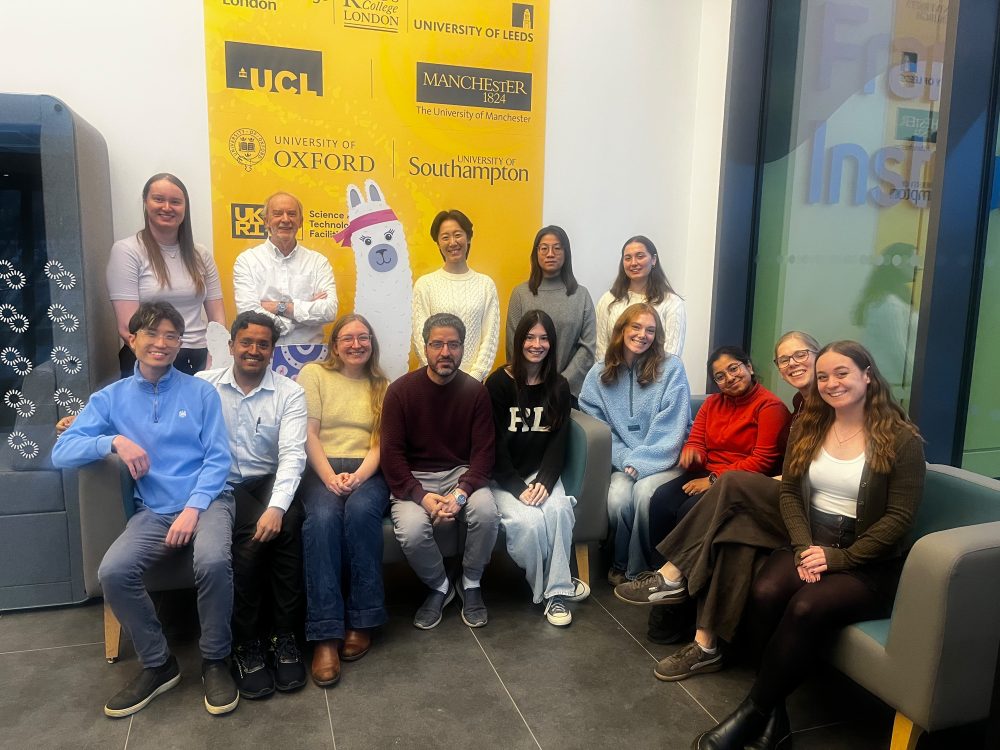
Over five days at the end of October, the Nanobody Team at the Franklin welcomed ten early career researchers for a hands-on course in nanobody discovery technology. Bringing together participants from across the UK, the course was designed to provide a practical introduction to the nanobody discovery pipeline through a combination of lectures, interactive workshops and time spent in the lab.
The program was designed to closely link each presentation and workshop to the planned lab work. Over the course of the week, participants followed a simplified nanobody discovery workflow from screening and identification of binders, data management, high throughput purification and characterisation of nanobody binders, and a snapshot of computational resources for nanobodies.
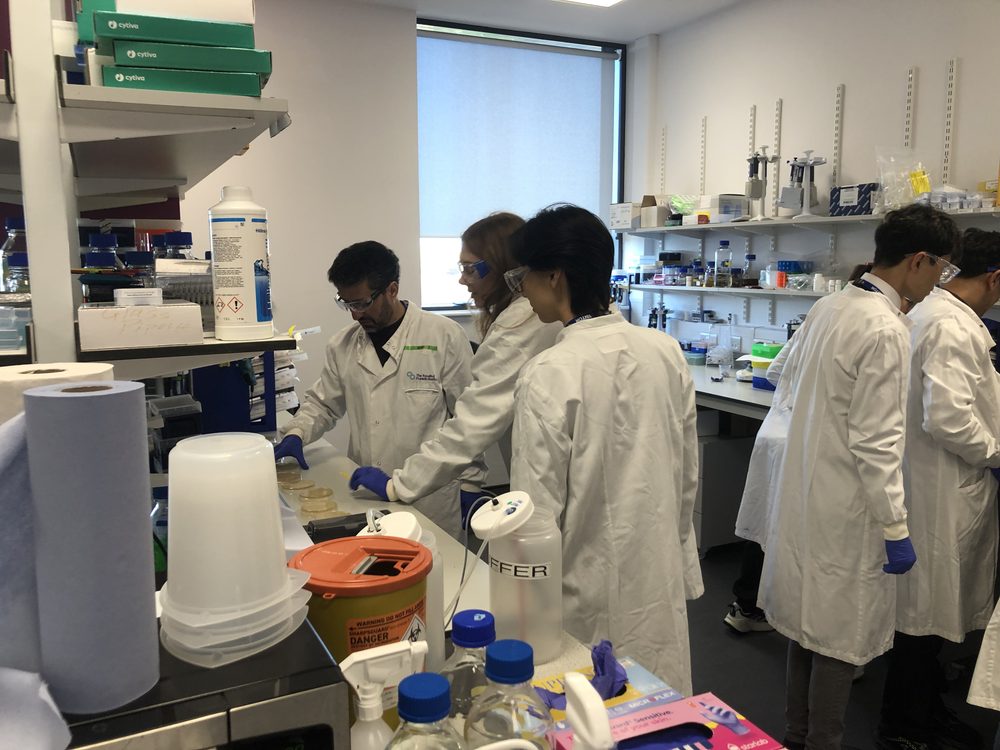
Lauren Eyssen and Kelly Parker led workshops which explored the key considerations before starting nanobody screening and workflow optimisation. Participants were guided through lab practicals by the team to experience our screening pipeline first-hand using both manual pipetting as well as using a semi-automated liquid handling platform. This provided insight into how automation can increase efficiency and improve accuracy by reducing the risk of handling errors.
“It was fantastic to see how the teams combined their diverse expertise and applied the concepts learned through the course to develop practical and well-considered plans.”
Andrew Quigley, Group Leader of the Membrane Protein Laboratory (MPL) at Diamond Light source, highlighted how nanobodies have facilitated structural elucidation of proteins that are typically difficult to determine. His presentation introduced the range of techniques used in the MPL for protein (and nanobody) characterisation. To build on this, Gail Calvert and Will Hughes from Sartorius demonstrated how biolayer interferometry (BLI) can be used for nanobody characterisation, using both the Octet R8 and R8e. Participants learned how binding interactions can be measured and nanobodies can be quantified before gaining hands on experience by running their own experiments.
Data management was another important theme of the course. Alex Lubbock, Head of Advanced Research Computing in the Franklin, introduced AntigenApp which is used to organise and manage nanobody discovery data in-house. He also discussed the existing public repositories, specifically NanoSaurus, and the merits of sharing nanobody sequences with the community. Matthew Raybould, Research Fellow in Immunoinformatics at Oxford University introduced the range of computational tools and resources developed by the Oxford Protein Informatics Group (OPIG) that support nanobody analysis and development.
To round off the week, participants were challenged to combine everything they had learned to design their own discovery campaign. Working in two groups, they developed and presented their projects, including strategies for screening, data analysis, characterisation and nanobody application.
“Huge credit to the team for delivering a tour de force. The course catalysed a stimulating exchange of ideas and gave me first-hand experience of the Rosalind Franklin Institute’s world-class nanobody discovery infrastructure. I left with fresh perspectives and real excitement about the future of the field.”