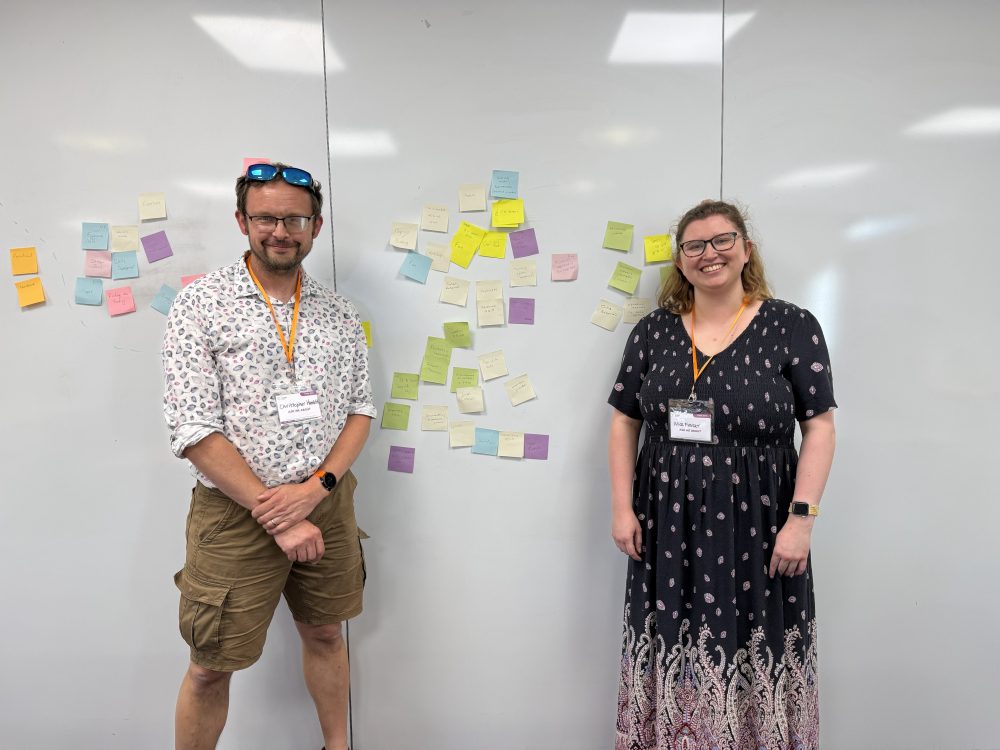
One strategy to engage them all? Exploring public engagement priorities through collaboration
Representatives from the Rosalind Franklin Institute (the Franklin) and Discover Materials, a UK-wide outreach programme that aims to inspire young people to learn about materials science, recently joined forces at The BIG Event to deliver an interactive workshop exploring how public engagement strategies can meet the needs of different audiences.
Although we work in different contexts, the Rosalind Franklin Institute, a national technology research institute focused on life science, and Discover Materials, a working group of ten UK universities who also benefit from strong support from the Henry Royce Institute and other members of the materials science community, both are part of the Engineering and Physical Sciences Research Council (EPSRC) ecosystem. Both organisations place a strong emphasis on inspiring and engaging future STEM (Science, Technology, Engineering and Mathematics) audiences.
Together, we developed One strategy to engage them all?, an interactive workshop exploring what different audiences value from public engagement and how those priorities may overlap.
Using a collaborative mapping exercise, participants considered the needs and motivations of six audience groups: organisations, scientists, partners, adult public audiences, children, and parents or teachers. The discussions explored a wide range of themes, including curiosity, organisational reach and skills development.
“The BIG Event was a great environment for this exercise. Everyone brought their own perspectives to the conversation and raised questions that I had not considered before. Throughout the session, smaller discussions emerged, with participants sharing their experiences and reflecting on some of the themes and challenges highlighted by the activity.”

One topic that led to a lively discussion was the role of fun in public engagement. Participants explored different interpretations of fun, including concepts such as Type 1 (fun in the moment) and Type 2 fun (fun in retrospect), as well as organised fun. Also, can enjoyment should be considered an outcome in its own right or a route to achieving wider objectives?
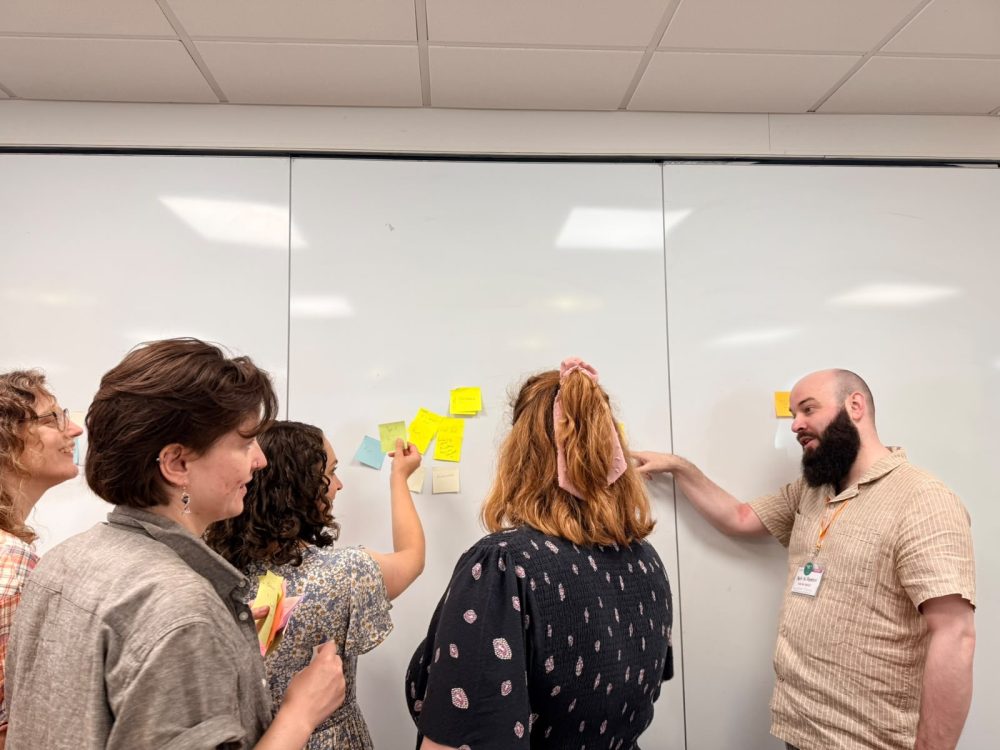
The workshop also prompted conversations about organisational motivations for public engagement. Participants discussed a range of perspectives, including the benefits engagement can bring and the tensions that can arise when organisational objectives are viewed differently by different audiences.
The session provided an opportunity to compare experiences from different organisations, share ideas, and explore common challenges facing those working in public engagement.
“I really enjoyed developing and delivering the session with Alice. She was great to work alongside, and I found it a great experience developing a session with someone who represents an institute.
The session highlighted that outreach is not a one-size fits all approach and that different goals, modes of engagement and differing audiences all feed into a strategy.”