
Putting the latest Quantum Detectors camera to the test
The Rosalind Franklin Institute and University of Oxford researchers have been working with UK SME, Quantum Detectors, to test the performance of their latest detector – the Merlin T4.
“The value of working in partnership with the Rosalind Franklin Institute goes far beyond the traditional relationship between technology provider and researcher. Working directly with the Franklin researchers to deliver their goal of developing new technologies to see the molecules of life in more detail including their dynamics and chemistry, we are able to design our products to meet the needs of the Franklin’s cutting-edge research, ultimately delivering value for the scientific community.”
The Merlin T4 camera, built around technology developed at CERN, can provide significant advantages for scientific imaging experiments, offering both frame-based and event-based detection. In event-based mode the timing of each individual electron impact can be measured rather than compiling information over set intervals. The result is a more granular and detailed dataset, allowing researchers to extract richer information from their experiments and enabling sophisticated post-experiment analysis.
Dr Zhiyuan Ding, a postdoctoral researcher at the University of Oxford and at the Franklin and co-first author on the paper explained, “The Merlin T4 is faster than many of the detectors that the currently available, which means that we can have a lower exposure time to give a comparable amount of signal. This means that the sample can be somewhat protected from the high energy electron beam, which is very valuable when conducting biological experiments.”
Compared to previous iterations of detector, the Merlin T4 is faster (providing 195 ps event binning) and has more pixels. The work recently published by researchers in Ultramicroscopy demonstrates for the first time that this additional speed comes at no additional cost in terms of the quality of the data gathered. This is based on two important measures, Detective Quantum Efficiency (DQE), which is the efficiency of transferring electrons into signal, and Modulation Transfer Function (MTF), a measure of the resolution loss due to information spread into neighbouring pixels.
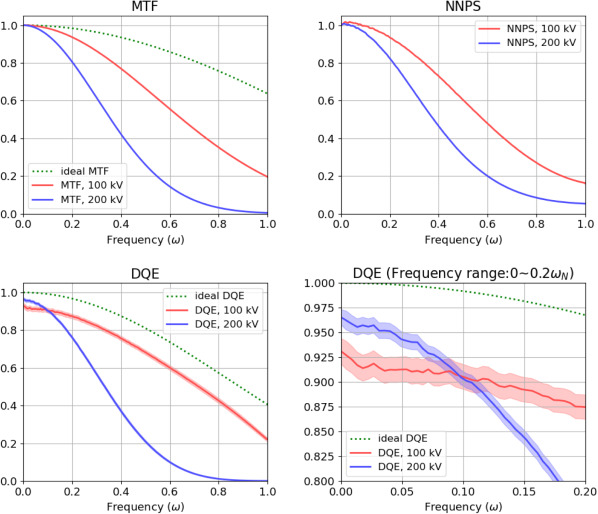
In fact, previous research from the group demonstrates that with Merlin T4 it is possible to reduce the blurring caused by extended electron travel as a post-processing step, which could further increase resolution.
A key application of the Merlin T4 at the Franklin is in Microcrystal Electron Diffraction (MicroED). MicroED is a Cryo Electron Microscopy (CryoEM) technique that allows protein and small molecule structure determination from sub-micron crystals. The high-speed readout of Merlin T4 coupled with its excellent sensitivity to individual electrons allow diffraction data to be captured in seconds whilst maintaining a high dynamic range. The Franklin team is hoping to exploit this to perform the high-throughput and low fluence data collection strategies necessary to explore time-resolved MicroED. This would allow researchers to observe molecules in motion, which is one of the ambitions of the Multidimensional Imaging (MDI) Challenge.
Dr Marcus Gallagher-Jones, senior staff scientist at the Franklin says, “The performance of the Merlin T4 represents a step change in the experiments that we can do, especially for MicroED which has previously been very slow, so it is an exciting time for us. We now have the throughput to perform experiments that would previously only have been possible at large scale facilities like a synchrotron or XFEL.”
One downside to this event-based detector is the vast amount of data recorded, which poses challenges for storage and processing. However, clever coding strategies developed by Zhiyuan, together with the computing infrastructure at the Franklin, have significantly improved the efficiency of data handling.
With these technological advancements, the Merlin T4 is now commercially available offering researchers across disciplines a powerful tool for exploration and discovery.
Nina Dimova, University of Oxford PhD student and co-first author on the paper, emphasised the significant potential of the Merlin T4 and how development of the software is still continuing, saying “Ongoing software development is focusing on ways to exploit the Merlin T4’s rich data output to improve the imaging resolution of the detector. The proof of concept is there; our current aim is to build on that and implement it into the readout, making it easily available to researchers.”