
Researcher Spotlight: Angharad Smith
Angharad Smith, final year PhD student, joined the Franklin in 2022 where she studies protein crystallisation within Bacillus thuringiensis (Bt) using cryogenic microscopy. In 2025, Angharad completed an internship as part of the UKRI policy internship scheme. She spent this time at the Chief Scientific Advisers office within the Department for Energy Security and Net Zero (DESNZ) in Westminster, where she was tasked with writing a technical brief on Net Zero technologies for the Chief Scientific Adviser.
“The internship was completely different to my PhD work, so it wasn’t my field of expertise, but I was willing to get stuck in reviewing the literature. I know how to read a scientific journal and understand what makes a good paper from my PhD studies. I think not being an expert helped as I was able to present ideas to different audiences without the use of jargon and at an appropriate level. I was able to build up my knowledge of the topic area from reviews and use the skills for my PhD to write a detailed technical brief, which we shared with stakeholders internally and presented to the Chief Scientific Adviser, Professor Paul Monks.
It was very interesting learning about how to work within the government and the goals that we see on the TV and in the news, and how they work in real life when you’re in the department. I learned a lot about what it’s like working within the Civil Service and what sort of jobs are available especially for scientists. Learning about the process of the Chief Scientific Adviser giving advice across a broad range of topics was really interesting.
I decided to apply for the internship as I wanted to try something different, I am interested in science communication and how science is translated in the government, especially after the Covid-19 pandemic, where you saw the scientists presenting to the public every day. I was interested in how they transfer information from people in the lab, to how it becomes policy. Interning within the Chief Scientific Advisers’ office helped me to learn about how to communicate scientific advice and ideas in a way that isn’t jargon based and tailoring to different audiences.”
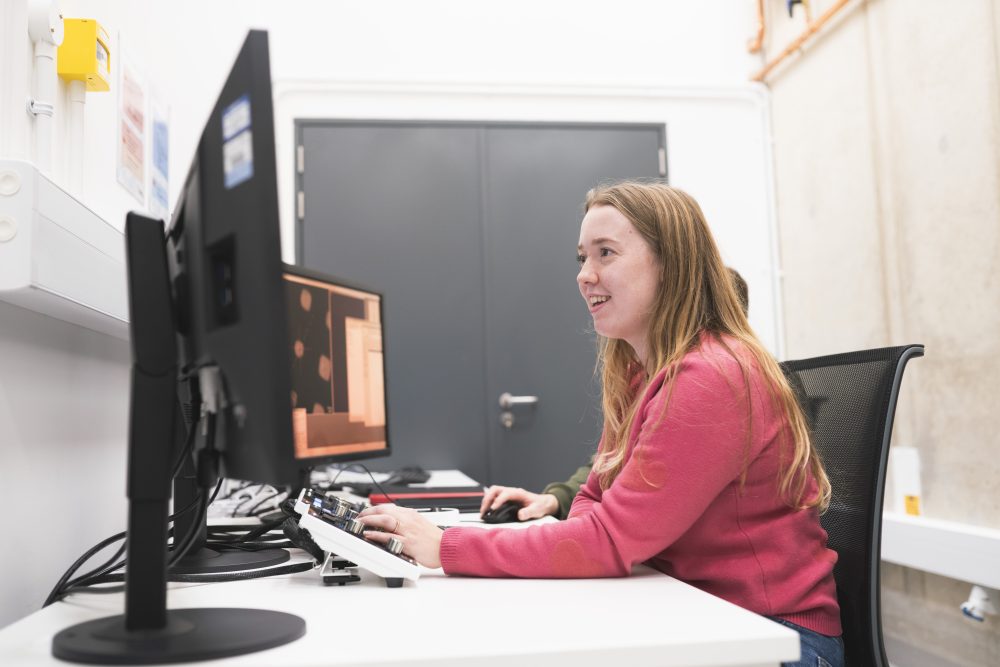
About Angharad:
With a background in chemistry and chemical biology, Angharad Smith joined the Franklin with a particular interest in different imaging modalities and how cells and bacteria could be imaged with multiple different resolutions and sample preparations. Angharad now works on a project with the University of Leeds, and the Multidimensional Imaging and Quantitative Biology Across Scales teams at the Franklin. Angharad’s project focuses on the study of Bt bacteria and how they form protein crystals over time. Integrating cryo-electron microscopy to view proteins and x-ray microscopy for whole cell imaging at Diamond Light Source alongside segmentation techniques to collect data across different imaging scales and modalities to track the assembly of the crystals. By expanding the knowledge of these bacteria, the project, in collaboration with the Institute of Structural Biology in Grenoble, aims to use this information to engineer these bacteria to make protein crystals of choice for use in pharmaceuticals or biopesticides.
“My bacteria work like protein crystal factories when triggered by starvation. If we could engineer them and change the DNA, we could change the proteins that are crystallised. My work has been focused on the imaging and tracking how a crystal is formed within the confines of a bacterial cell.”
