
The Rosalind Franklin Institute welcomes Science Minister, Chris McDonald to celebrate plans for next 5 years
The government has endorsed the Rosalind Franklin Institute’s science plans for the next 5 years with a visit last week from Minister for Science, Innovation and Investment, Chris McDonald MP. The institute will benefit from a new £67 million investment.
The Rosalind Franklin Institute is the UK’s national research institute for the development of transformative technologies to deepen our understanding of biology and speed up early therapeutic discovery.
The Rosalind Franklin Institute and Henry Royce Institute will share £162.7 million of public funding from UK Research and Innovation (UKRI) through the Engineering and Physical Science Research Council (EPSRC) for the next five years to build on their record of improving lives and driving growth.
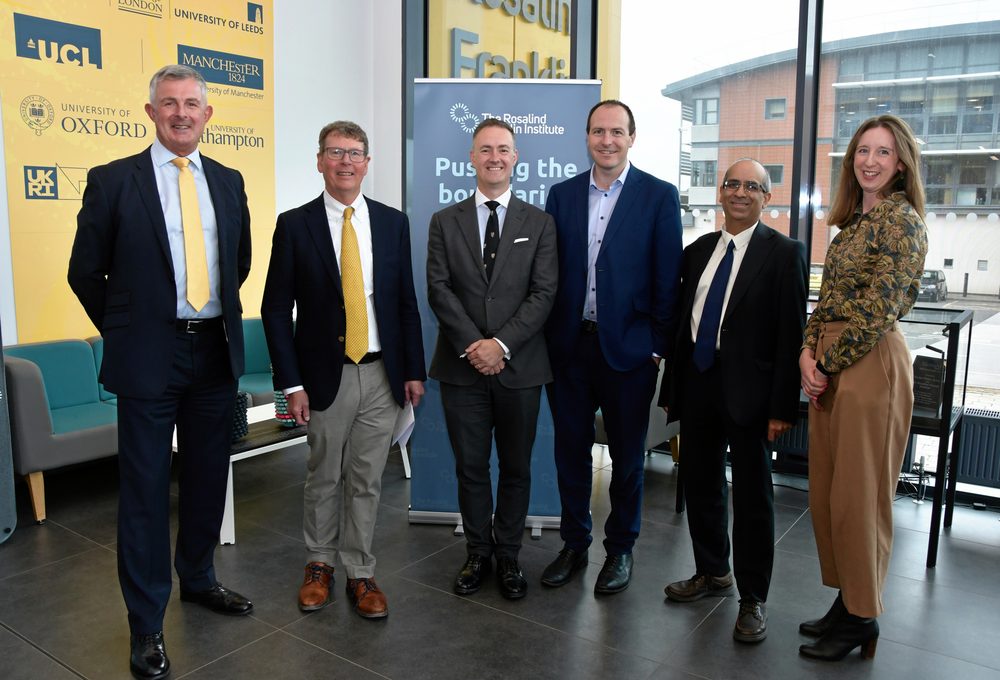
Science Minister Chris McDonald said: “We have world leading science research in the UK that pushes the boundaries of knowledge. It is the foundation of our mission to reindustrialise the country, creating good, well paid jobs by developing new technologies and growing British companies.
“The Rosalind Franklin Institute and the Henry Royce Institute are world leading in their fields. Combining biological knowledge, advanced physics and materials development to understand how the cells in our bodies function, and can be repaired and treated with precision medicines.
“The research gives our country a competitive edge, so long as we commercialise it in industry. Developing new medical technologies and treatments and bringing them to market is good for jobs and good for health, making a real impact on people’s lives.”
Professor Paul Matthews, Director of the Rosalind Franklin Institute, said: “We are delighted to have the strong endorsement of the UK government for our future plans. The Franklin’s work over the next 5 years will build a new generation of imaging, chemistry and AI tools that let us see disease processes clearly enough – from single molecules to whole organs – to identify disease earlier and confidently ‘drug the currently undruggable’.”
Executive Director for the Strategy Directorate at UKRI’s Engineering and Physical Sciences Research Council (EPSRC), Dr Kedar Pandya, said: “The Rosalind Franklin Institute and Henry Royce Institute have a proven track record of turning public investment into research that advances knowledge, improves lives and drives growth.
“This continued funding from UKRI builds on that success. It will give researchers the tools and resources to answer some of the biggest questions in the health and advanced materials industries, keeping the UK at the forefront of global science and engineering.”
While at the Franklin, the minister unveiled a one-of-a-kind microscope which operates at 10 times the resolution of conventional light microscopy. The researchers will use this microscope to understand how cells in the gut behave to help us learn more about chronic conditions, such as inflammatory bowel disease (IBD) which affects 1 in 123 people in the UK.
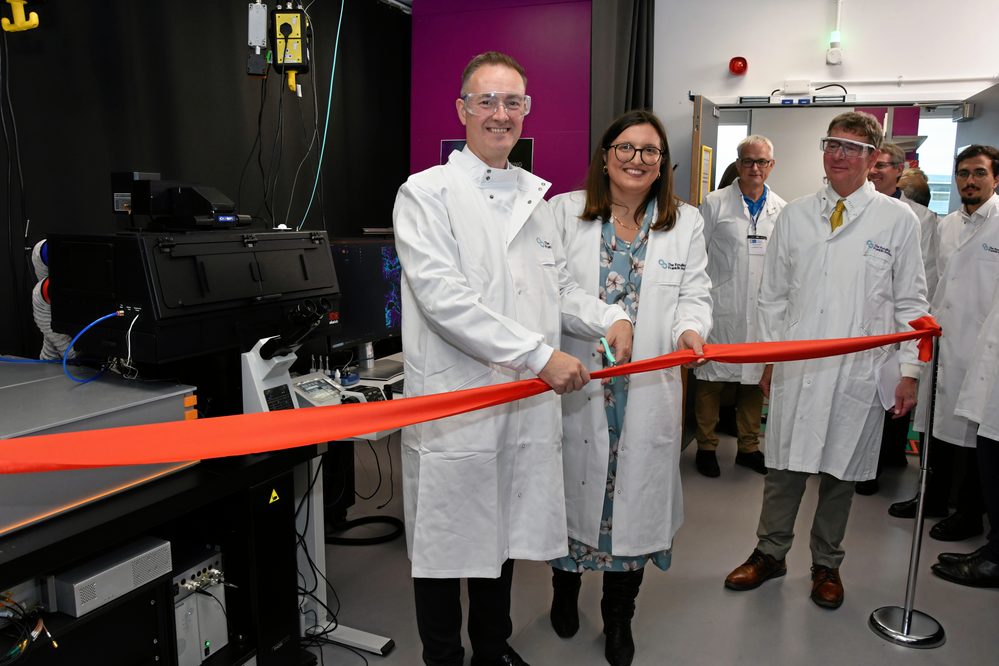
Dr Karina Pombo-Garcia, who leads the Cell-cell interactions at the Franklin, said:
“It is incredibly exciting to bring this next generation of super-resolution optical microscopy to the Franklin. Its combination of capabilities is unique in the UK, creating new opportunities to collaborate with researchers across the country. We will use it to reveal how different proteins work together to build the gut barrier by following dynamic processes such as the formation of liquid-like condensates inside cells.”
“Our ambition is to push nanoscale visualisation beyond thin, fixed cells and into living, thick three-dimensional samples such as organoids. This would allow us to observe disease biology in human tissue models that more closely reflect the context in which disease actually develops.”
By co-creating these new technologies with academic and industry partners, who have expertise throughout the innovation pipeline from technology manufacturing to drug design, the Franklin can tackle challenges that no single organisation could solve alone. In doing so, strengthening the UK’s leadership in life sciences, technology and therapeutic innovation.
The Franklin is also working with microscope manufacturer JEOL on a long-term partnership to develop the next generation of electron microscopes and extend the capability of biological imaging. With JEOL scientists embedded at the Institute, this partnership has brought one-of-a-kind instrumentation to the UK.
Dr Sarah Harper, JEOL’s Sales Director and Global Life Science Strategy Leader, said: “Our work with the Rosalind Franklin Institute has always been a genuine partnership — scientists, engineers and application specialists solving hard problems in biological imaging together. We haven’t just built the instruments; we’ve built the techniques that make them useful. Seeing that translate into new discoveries is exactly why long-term collaborations like this one matter and we are glad that support is in place to secure the Franklin’s future so we can continue our journey together.”
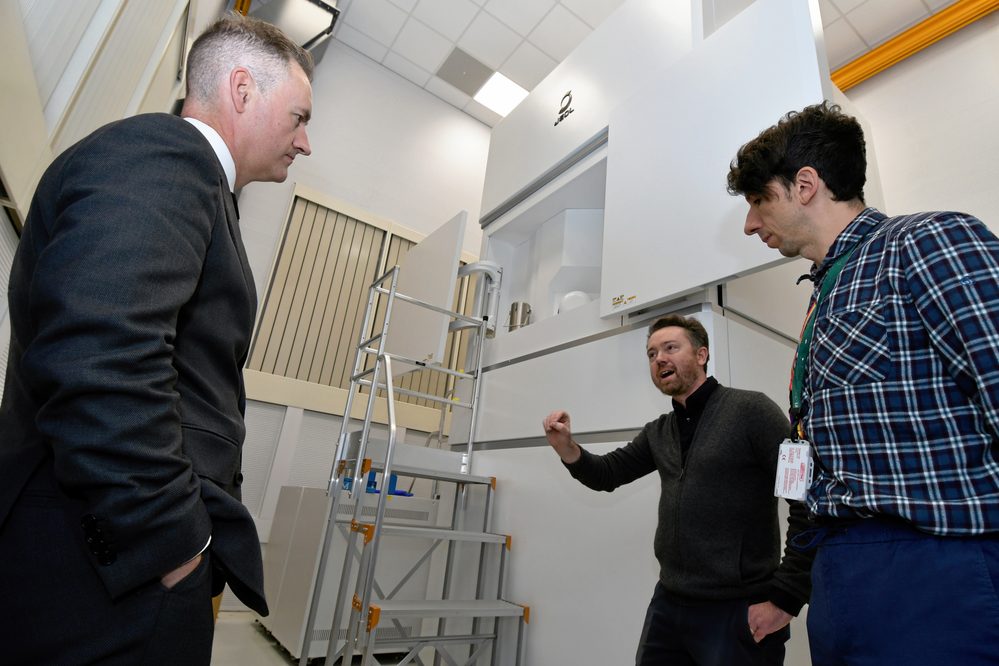
Dr Judy Kim, Deputy Challenge Lead for Multidimensional Imaging and Chair of the Graduate Studies Board, said:
“The future of electron microscopy will be shaped by close collaboration across the scientific community, together with industry partners around the world. We are so pleased to work alongside scientists to deepen the fundamental understanding of chromatic aberration correction and explore the capabilities of advanced direct electron detectors. Together, these efforts are opening new possibilities for high-resolution biological imaging.”
Dr Judy Kim went on to add: “We are delighted that EPSRC has recognised the strengths of the Franklin PhD programme and decided to renew its funding for the next five cohorts. This is a strong endorsement of the quality and impact of the collaborative UK-wide programme, as well as the unique training environment we provide for the next generation of interdisciplinary scientists.”
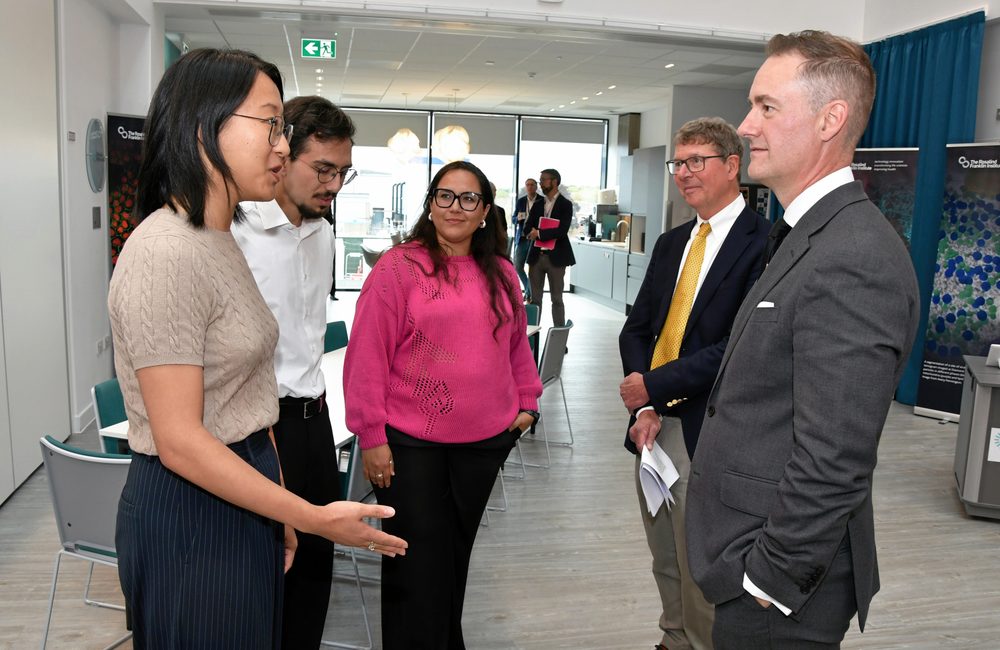
The Franklin’s PhD scheme will also continue to be supported by UKRI EPSRC over the next 5 years. The Franklin PhD programme provides an interdisciplinary environment where students can develop the skills they need for future careers in science and technology. The programme builds on the Institute’s strengths in physical sciences and technology, while bringing together expertise from UK universities to give students a strong foundation for collaborative and innovative research.
Dimitrios Ioannidis, PhD student at the Franklin in Cell-Cell Interactions, said: “My project investigates how cells and proteins organise to build the protective gut barrier during human development. Using gut samples and super-resolution STED microscopy, I visualise this process at the nanoscale. Understanding how a healthy barrier forms could reveal what later goes wrong in conditions such as inflammatory bowel disease (IBD). The unique combination of technology and discovery at the Franklin makes this project particularly exciting.”