
Dorcas Cheung
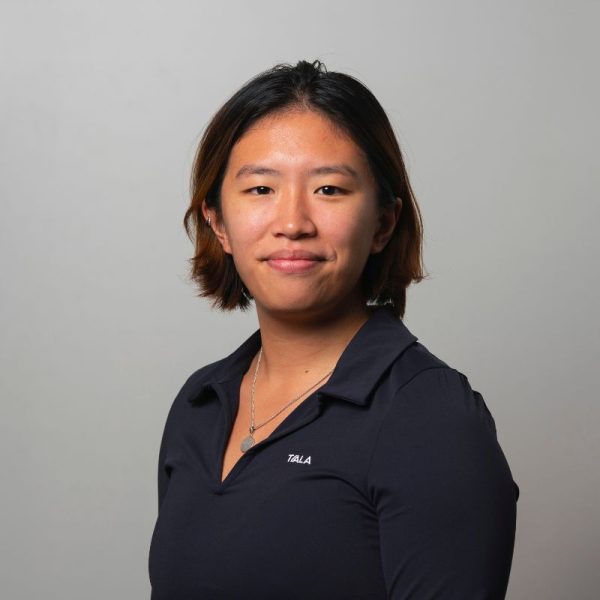
Thesis title: Developing Trapped Ion Mobility Mass Spectrometry Imaging to spatially resolve heparan sulfates in Alzheimer’s disease brains
Franklin supervisors: Professor Helen Cooper, Dr. Anthony Devlin
University: University of Edinburgh
University supervisor: Professor David Clarke
External supervisor/collaborators: Dr. Steph Fowler, Professor Benjamin Davis
Dorcas’ is developing matrix assisted laser desorption trapped ion mobility mass spectrometry imaging (MALDI-TIMS) to advance the understanding of carbohydrates, specifically heparan sulfate glycosaminoglycans (HS GAGs) in Alzheimer’s disease (AD). GAG-omics have been a long ignored “omic” due to its being isomeric nature and diverse sulfation patterns. This poses a challenge in understanding their chemical structures and spatial distribution in tissue.
Current studies suggests specific sulfated subtypes of HS GAGs are implicated in tau pathology, one of the hallmark protein aggregates found in AD. She aims to spatially localise these carbohydrate structures to understand their involvement in tau internalisation in AD neurons. It is also a powerful technique that is useful for other glycan related disorders with potential to use glycans as a biomarker for AD progression.
Dorcas graduated from University of Manchester with a BSc in Biomedical Science where she investigated glial responses in Alzheimer’s Disease. Her continual interest in neurodegenerative diseases led to her MSc Dementia Neuroscience at University College London. She then spent 3 years as a research assistant at the UK Dementia Research Institute at Imperial College as part of the Multiomics Brain Atlas project. With her continual interest in multiomic techniques, she is excited to be part of the Franklin’s interdisciplinary approach in integrated chemical imaging to investigate pathological mechanisms in neurodegenerative diseases.