
Electron ptychography

Advanced Methods and Algorithms for Electron Ptychography of Biological Specimens
Electron ptychography is a powerful, dose-efficient imaging technique for studying biological specimens. This project will develop improved scanning and phase recovery methods to reduce the electron dose needed even further. This could enable high-resolution imaging of more delicate samples and reveal biological structures that are currently difficult to study.
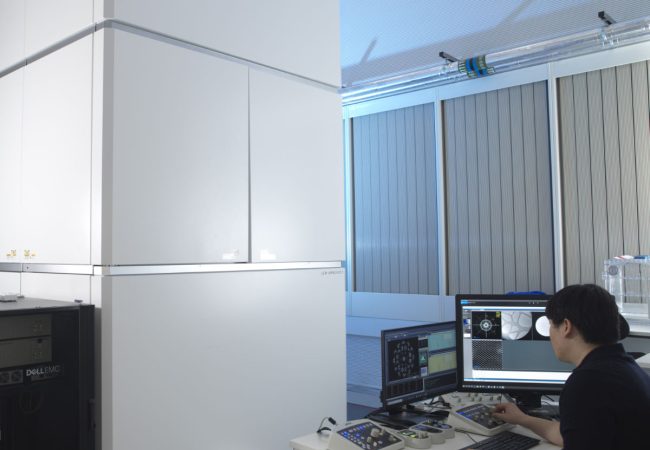
Aberration-corrected transmission electron microscope
Ruska is an aberration-corrected transmission electron microscope (TEM) used to explore novel methods to study radiation sensitive specimens such as biological materials that have been cryogenically preserved or encapsulated in liquid for dynamic observations.

New electron microscopy method opens window into structural studies of thicker, more complex biological samples
Scientists at the Rosalind Franklin Institute have demonstrated a novel way to recover high-resolution structural details of biological objects using transmission electron microscopy – a technique that could reveal new details from thicker, more complex specimens than before. The approach,…