Overview of Challenge Areas
Prospective students are asked to apply to a specific Franklin Challenge during their application to reflect the area that they would be interested in working in.
Below you can find an overview of each of the Franklin Challenges along with possible project supervising scientists, as well as links to some of students that are currently undertaking a project aligned with this Challenge.
Artificial Intelligence and Informatics for Predictive Biology
Open to: Home students and international students
To create a generalisable digital representation of cells which can be used to design and develop experiments in silico that are meaningfully predictive of results obtained in live cells.
Key subject areas:
Algorithm Development, Cryo Electron Tomography Automation, Big Data, Computational Biology, Computational Modelling, Data Integration and Analysis, Machine Learning, Segmentation tools.
Example project supervisors:
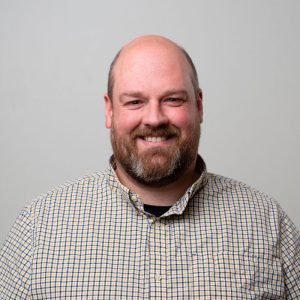
Dr Mark Basham
Science Director and Challenge Lead
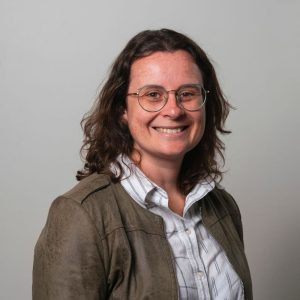
Dr Laura Shemilt
Deputy Challenge Lead and Head of Research Software Engineering

Dr Casper Berger
Senior Application Expert
Some example student projects in Challenge area:

Integrated Chemical Imaging in Cells and Tissues
Open to: Home students and international students
We are developing technologies that provide a comprehensive spatially resolved view of proteins, their interaction and chemical environment in whole tissues at near cellular resolution and demonstrating these technologies in exemplar applications in understanding neurodegeneration. The aim is to provide powerful tools for characterisation of potentially pathogenic proteins and their interactions, and to enable new therapeutic target discovery. Our focus is on native ambient mass spectrometry (NAMS), which enables chemical imaging of intact protein assemblies, and on ultrahigh resolution secondary ion mass spectrometry (SIMS) imaging of small molecules, and the integration of these mass spectrometry approaches with microscopy.
Key subject areas:
Analytical Chemistry, Correlative imaging, Mass spectrometry imaging, Mass spectrometry, Neurodegeneration, Chemical imaging
Example project supervisors:
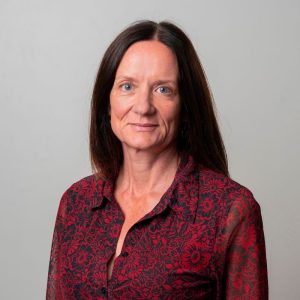
Professor Helen Cooper
Science Director and Challenge Lead
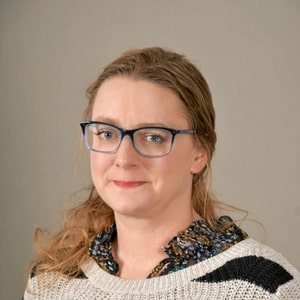
Dr Felicia Green
Deputy Challenge Lead and Senior Scientist
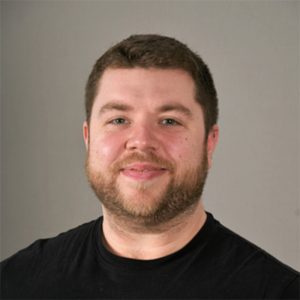
Dr Anthony Devlin
Postdoctoral Research Associate in Imaging Mass Spectrometry
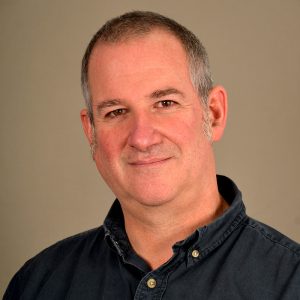
Dr Logan Mackay
Biological Mass Spectrometry Facilities Manager
Some example student projects in Challenge area:
Clara Dieterle
PhD Student

Minal Dayaram
PhD Student
Peter Hughes
PhD Student
Alexander Wilkes
PhD Student
Molecular Perturbations: Chemistry Engineering Biology
Open to: Home students and international students
Chemical methods that can edit the molecules of life offer the potential for precise control over biological processes. Such tools would enable fundamental biomolecular mechanisms to be probed in unprecedented detail, and may also pave the way for new ways to correct pathologies.
Building on our established toolkit for benign protein and carbohydrate editing, we are now developing new routes to alter biomolecules directly within living systems. We will explore both in vivo compatible chemistries, alongside photophysical and redox-controlled methods for spatial and temporal control. These methods will be used to address diverse questions, including improving methods for pharmacokinetic tracing, or understanding the molecular determinants of cell-cell and cell-virus binding through to the design of ‘new-to-nature’ functions in living systems.
Key subject areas:
Engineering Biology, Analytical Chemistry, Antimicrobial Strategies, Chemical Biology, Chemical Synthesis, Condensates, Enzymology, Glycochemistry and Glycobiology, In-cell Chemistry, In vivo Chemistry, Labelling, Mass Spectrometry, Mechanistic Biology, Post translational modifications, Protein Chemistry, Proteomics, Synthetic Biomolecules.
Example project supervisors:
Professor Ben Davis
Science Director and Challenge Lead
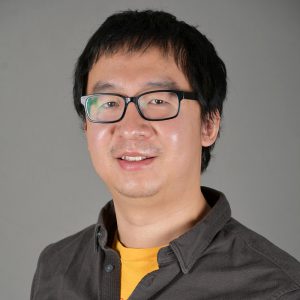
Dr Liang Wu
Deputy Challenge Lead and Glycobiology Scientist
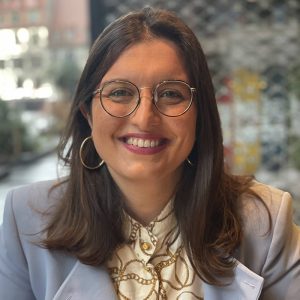
Dr Karina Pombo-Garcia
Emerging Interest Area Lead and Group Leader
Dr Anthony Devlin
Postdoctoral Research Associate in Imaging Mass Spectrometry
Some example student projects in Challenge area:
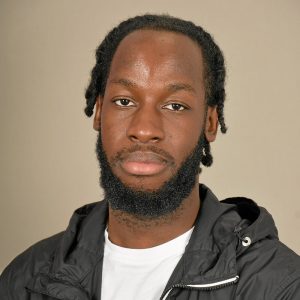
Richon Blake
PhD Student
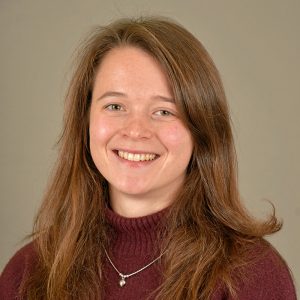
Natasha Cooke
PhD Student
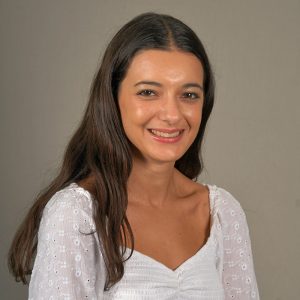
Lara Fragapane
PhD Student
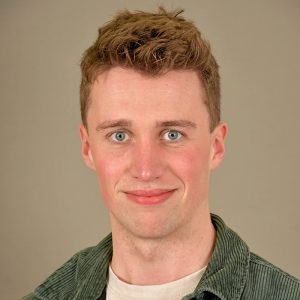
Michael Penny
PhD Student
Multidimensional Imaging
Open to: Home students and international students
We must leverage advanced computational methods as physics-informed algorithms are transforming computational imaging, enabling faster acquisition, higher resolution, and more robust interpretation for modern discovery science.
Our alternative acquisition methods will be used to examine biological structures for high resolution studies in the TEM. In the BioCOP, we make developments in structured Illumination Microscopy and combine Lattice Light Sheet Microscopy (LLSM) with Fluorescence Correlation Spectroscopy (FCS) for live deep-tissue imaging of biomolecular dynamics.
Key subject areas:
TEM, STEM, 4D STEM, 3DED, MicroED, ScanningED, SerialED, Protein Crystallography, Liquid-liquid Phase Separation, Condensates, Spatiotemporal Imaging, Fluorescence, Structured Illumination, Advanced Optical Microscopy, Spectroscopy, Ptychography, Electron optics, Image Simulations, Cryo-EM, Physics, Mathematics, Iterative Algorithms, Scanning ED, Liquid Phase TEM, iDPC, Alternative Scanning
Example project supervisors:
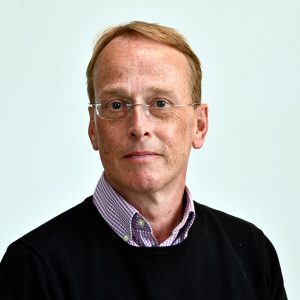
Professor Angus Kirkland
Science Director and Challenge Lead
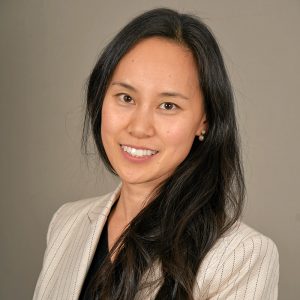
Dr Judy Kim
Deputy Challenge Lead and Chair of the Graduate Studies Board
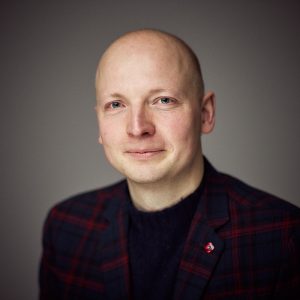
Professor Marco Fritzsche
Rosalind Franklin Kennedy Trust Research Fellow
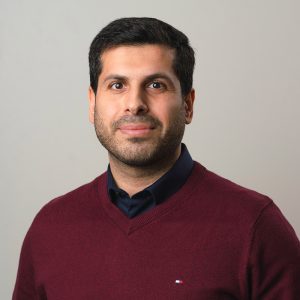
Dr Amirafshar Moshtaghpour
Staff Scientist
Some example student projects in Challenge area:

Quantitative Biology Across Scales
Open to: Home students only
The Quantitative Biology Across Scales Challenge integrates imaging from millimetres to microns, generating multidimensional descriptors that inform computational models for predictive, pathology-specific biomarkers. These workflows aim to link across modalities and spatial scales, ultimately supporting translation for clinical application.
Key subject areas:
Big Data, Correlative imaging, Advanced imaging, Structural biology in situ, Image Analysis, Segmentation, Machine Learning, Mass spectrometry, Volumetric imaging, SEM, TEM, FIB/SEM, X-ray, Gestation, Women’s health, Pipelining, Workflow development, Cell biology, Technology development, Synchrotron imaging
Example project supervisors:
Dr Michele Darrow
Challenge Lead and Head of Data Strategy for CryoImaging
Dr Maud Dumoux
Deputy Challenge Lead and Technology Lead for Cryo Imaging
Dr Avery Pennington
Senior Research Software Engineer
Some example student projects in Challenge area:
How Pathogens Interact with Human Cells
Open to: Home students only
A key driver for the development of new ways to prevent and treat infectious diseases is an understanding of host–pathogen interactions. We use optical imaging and cryogenic Electron Tomography (cryoET) methods in conjunction with proteomics, biochemical and molecular biology to characterise the molecular interactions between pathogens and host cells in time and space, both extra- and intracellularly.
Key subject areas:
Cell biology, nanobody technology, Cryo-EM, Cryo-ET, optical imaging, microbiology, virology, chemical biology, proteomic and imaging mass spectrometry, computational biology, data integration and analysis, machine learning.
Example project supervisors:
Professor Ray Owens
Challenge Lead and Head of Nanobodies Discovery Platform
Dr Maud Dumoux
Deputy Challenge Lead and Technology Lead for Cryo Imaging
Dr Lucile Moynie
Senior Scientist in Structural Biology and Protein Science
Dr Liang Wu
Deputy Challenge Lead and Glycobiology Scientist
Some example student projects in Challenge area:
Cell-cell Interactions
Open to: Home students and international students
We are interested in approaching biological questions as multiscale processes from molecules to tissues. At times, the underlying mechanisms of self-organisation of molecules and tissues might follow the same rules. We are fascinated in understanding how epithelia cells organised their components in space and time to shape a robust tissue that allows life. Our primary technique is super-resolution STED microscopy which allows us to visualize the dynamics of nanoscale adhesion complexes inside cells. We hope the visualization of these processes in space and time at high resolution in 3D tissue samples will bring us a step closer to understanding the biology and link to the pathology.
Key subject areas:
Cell Biology, Biophysics, Advanced Optical Microscopy, Biochemistry
Example project supervisors:
Dr Karina Pombo-Garcia
Emerging Interest Area Lead and Group Leader
Dr Liang Wu
Deputy Challenge Lead and Glycobiology Scientist
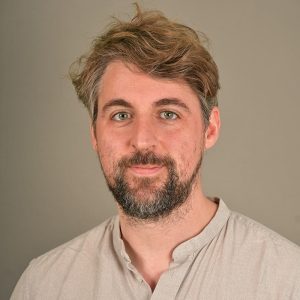
Dr Michael Grange
Emerging Interest Area Lead and Tomography Group Leader
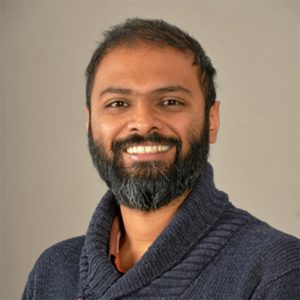
Dr Narain Karedla
Staff Scientist
Some example student projects in Interest area:
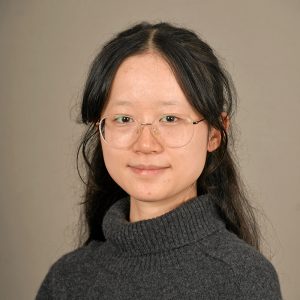
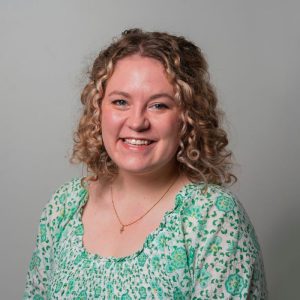
Xuemeng Chen
PhD Student
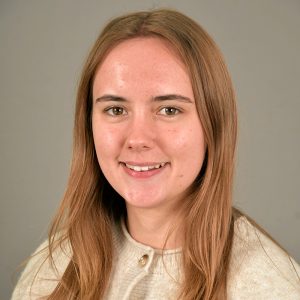
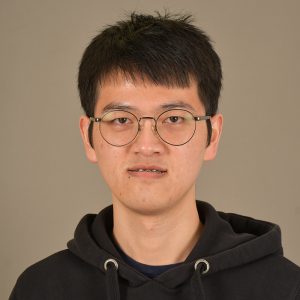
Rebecca Hobbs
PhD Student
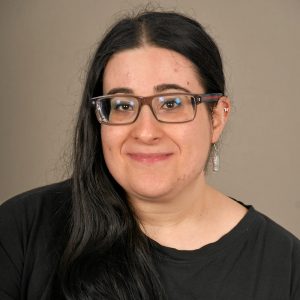
Dimitrios Ioannidis
PhD Student
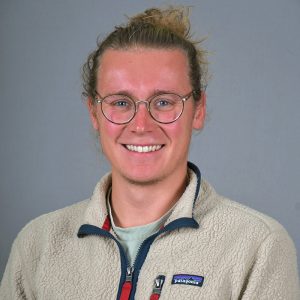
Kostantina Karagianni
PhD Student
Structural Cell Pathology
Open to: Home students and international students
Over 40 years great progress has been made in understanding the biological macromolecules essential for life. However, to examine the molecular determinants of progression for diseases we need to build tools that quantitatively bridge macromolecular structure determination and cellular dysfunction.
Our aim is to build capability in imaging tissues on molecular and cellular scales for following the development of disease from its early stages. Examples include cytoskeletal disorganisation which is believed to be an early stage in the development of Alzheimer’s disease; quantitative, integrative observations have yet to be developed to allow robust testing of this hypothesis. The broad challenges are to build bottom-to-top developments across hardware, software and (clinical) applications to address real-world questions in disease.
Key subject areas:
Cryo-ET, Plasma FIB/SEM, Volumetric imaging, Data Analysis, Multimodal Imaging, Integrative Methods, Mass Spectrometry, Structural biology, Neurobiology
Example project supervisors:
Dr Michael Grange
Emerging Interest Area Lead and Tomography Group Leader
Dr Calina Glynn
Senior Postdoctoral Research Associate
Some example student projects in Interest area: